By; AJ Witte
This past week we took a look at various writings and artforms which arose during the Muromachi period of Japan. One of the major readings from this week which stood out to me was the Kenmu code, a code which arose from the ever growing warrior population of Kyoto. This arose because of the ever-growing power of the Shogunate, also sharing a roof with the imperial court. The various edicts of the code to me paint a picture of equity between the classes. For example, code #1 states as such, “The need for enforcing frugality. Recently, fashion has been used as an excuse to indulge in extravagance and excess, such as the wearing of twill damask and brocade, ornamental silver swords, and elegant attire to dazzle the eyes. This has become a mania. While the rich swell with pride the poor are ashamed because they cannot match them.” (419 de Bary, Keene, Tanabe, Varley).
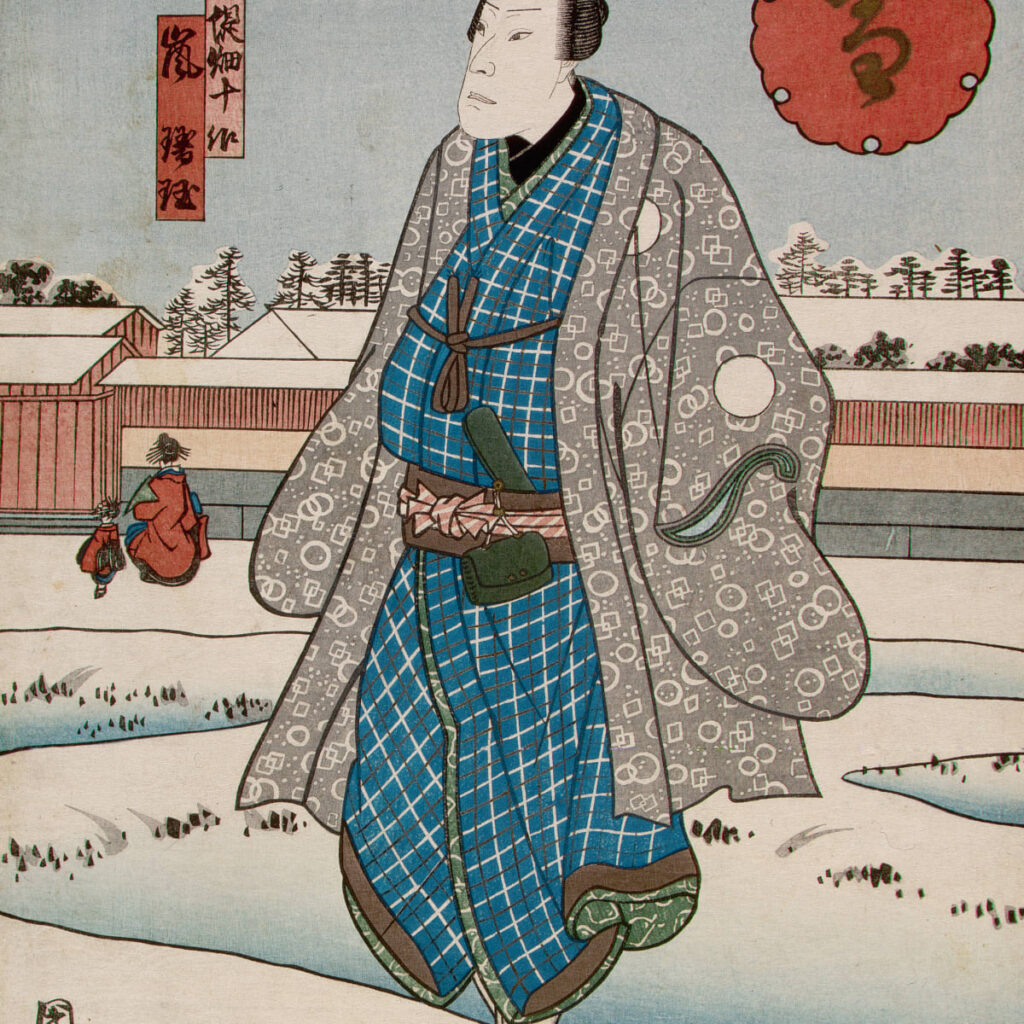
A Painting of a Wealthy Samurai
This particular code strikes me as interesting as we are beginning to really see the beginnings of what I would call performative equity. If there are to be disparages within the classes, it must not be shown for fear of creating divides. The reason this feels so interesting to me is the fact that these divides do very much in fact exist, however, you are not to bring attention to them for fear of causing the classes to become ashamed and may result in a class uprising. It is an interesting way to combat economic inequality. It feels like such a far cry from what we see today in our modern United States, as if anything you are encouraged to do the exact opposite. You are to put on the front that you are wealthy and becoming even if you may not have the necessary wealth to do so. The term flexing comes to mind when I think on this issue. Or the idea of flaunting your wealth over your peers. Performative wealth comes to mind. I think that if anything it shows just how little we value respect of your common person in the United States as compared to Muromachi Japan. Even if the aforementioned performative equity existed, who’s to say that it is better than the alternative performative wealth found within the States today.
Sources:
“The Kenmu Code.” In Sources of Japanese Tradition, Vol. 1: From Earliest Times to 1600, compiled by Wm. Th. de Bary, Donald Keene, George Tanabe, and Paul Varley, 419-420. Second edition. Introduction to Asian Civilizations. New York: Columbia Univ. Press, 2001
